



A Beginner's Guide to Heraldic Symbols: What Lions, Eagles and Oaks Really Mean
Lions, eagles and oaks carry centuries of association, but heraldry rewards careful reading. Here is how to interpret the most common charges without falling for myth.
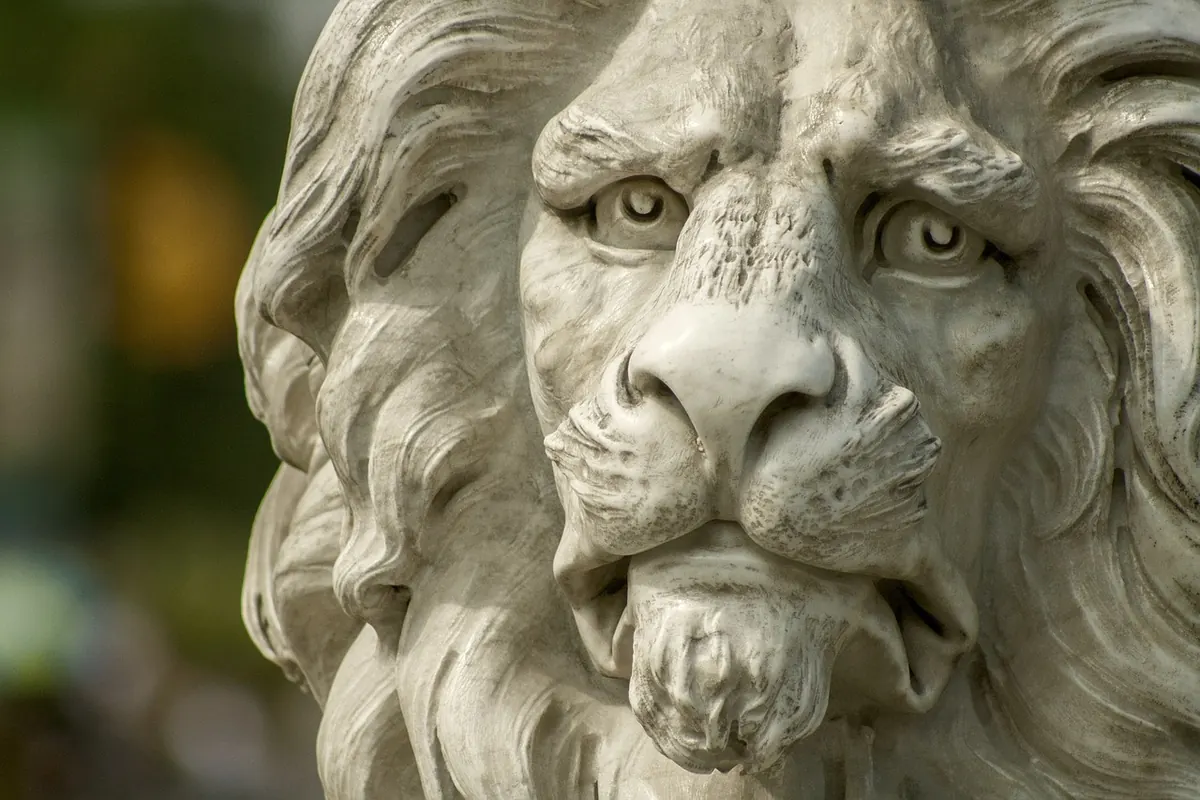
A lion on a shield is said to mean courage. An oak tree stands for endurance. A fleur-de-lis brings purity. It sounds tidy, and it is repeated on countless mugs, keyrings and family history websites. The trouble is that medieval families were not working from a dictionary. They were working from fashion, local pride, family jokes and the simple need to be recognisable.
That does not make heraldic symbols meaningless. It makes them interesting. Read well, a coat of arms tells you about a family's connections, its ambitions and its sense of humour. It rarely tells you their personality.
What a charge was actually for
Before meanings, there was identification. Armour covered a man from head to foot, and in a tournament or on a battlefield you needed to know who was coming. So designs had to be bold, repeatable and clearly different from the man standing next to you. Charges were chosen to be seen at distance, not to be decoded.
Among the reasons a specific charge turns up on a specific shield:
- Wordplay. A family called Corbet might bear a raven (a corbie in older Scots and northern English). A family named Hart might bear a stag. These are called canting arms, and they are far more common than any symbolic scheme.
- Local landscape. Oak trees, heraldic wells, garbs of wheat and stylised hills often point to land the family held or a place they came from.
- Marriage. When two families joined, charges were often combined or inherited. An unexpected eagle in an otherwise English design usually arrived with a bride.
- Office or service. Keys, swords, anchors and bells frequently relate to a post held, a guild, or a town rather than to a moral quality.
There is no medieval codebook that assigns one fixed meaning to each charge. The neat symbol dictionaries that do are largely a Victorian enthusiasm, well meant but not evidence. So treat traditions as tradition, not proof.
Lions: courage, or just a very good default
The lion is the most popular beast in British heraldry by a wide margin, largely because of its use in the royal arms from the twelfth century onwards. For centuries, imitating the crown was a way of signalling loyalty and status. That is why the lion is the least diagnostic charge you can find.
The posture matters more than the animal. A lion rampant rears upright, claws raised, and reads as active and martial. A lion passant walks with one forepaw lifted, the pose used in the English royal arms. A lion couchant lies down, resting but alert, often chosen for a calmer, more settled look. A lion sejant sits. Heralds would also specify where the lion looks — guardant facing the viewer, regardant looking back over its shoulder. Two shields with the same lion in different postures belong to different families.
Eagles and other birds
An eagle displayed — wings spread, head turned to one side, legs splayed — is one of the oldest and most striking designs in European heraldry, tied to imperial Rome and later to the arms of Austria, Prussia and Poland. In Britain it often suggests a claim to antiquity. Just as often it arrived through a marriage into a continental family, and says more about a wedding than a worldview.
Birds are also excellent for puns, which is why so many British arms include them. A falcon, a swan, a peacock in pride, a heron, a raven, a cock: each was chosen by someone who liked the look of it, or whose surname demanded it. The martlet, a swallow-like bird drawn without feet, is the exception worth knowing — it works as a mark of cadency and appears on the arms of many younger branches.
The oak, the laurel and the rest of the garden
The oak is the great British tree in heraldry, and much of its pull comes from one episode. After the Battle of Worcester in 1651, Charles II hid in an oak at Boscobel, and oak leaves, acorns and full oak trees became a badge of loyalty for generations afterwards. Strength and endurance are fair readings, then, but the real association is political.
Other plants carry clearer family connections. A rose can be Yorkist, Lancastrian or simply the Tudor rose of union. A thistle points to Scotland. A garb — a sheaf of wheat — usually indicates land or agriculture. Laurel and olive wreaths tend to be additions made for achievement rather than inherited, and are worth noticing as later embellishments rather than original charges.
Reading the smaller marks
Small charges are where beginners get lost. A few pointers:
- Crosses suggest faith, but the dozens of variants (crosslet, moline, patonce, potent) mostly existed so that neighbouring families could tell their shields apart.
- Mullets — five-pointed stars — often mark a third son, and became popular generally after the Crusades.
- Crescents mark a second son in English cadency, and were also adopted by families with later connections to the Mediterranean.
- Fleur-de-lis links to French royalty and to the Virgin Mary, but was borrowed so widely for its elegance that it often means very little.
- Hearts, hands, keys, anchors and bells usually point to a trade, guild or office rather than a virtue.
- Chevrons, fesses, bends and pales are ordinaries, not charges. They are the architecture of the design, and changing them changes the arms entirely.
One clarification worth carrying with you: strictly speaking, the crest is only the figure sitting on top of the helmet. The whole design — shield, helmet, crest, mantling — is the coat of arms or, more formally, the achievement.
How to read a crest with confidence
- Describe before you interpret. Note the colours of the field and the charges, the posture of every animal, and the order they appear in. A lion passant gules on a field argent is a precise thing.
- Check for differences. Small marks of cadency separate branches of the same family. Two shields that look almost identical may belong to cousins two centuries apart.
- Test the obvious explanations first. Does the charge match the surname, the place, or a known marriage? Those three answers are right far more often than symbolic ones.
- Then consult the traditions. Use a general symbol guide if you like, but label it in your head as folklore and say so if you pass it on.
- Verify with real records. County record offices, local heraldry societies and the College of Arms hold material no website index will match.
If you are using heraldry for a family project, a signet ring or a piece of design work, the traditional meanings are a fine source of flavour. They are not evidence of descent, and a crest printed on a gift may belong to a different family with your surname entirely. For a grant of arms, a formal check, or anything with legal weight, speak to the College of Arms or a qualified genealogist rather than relying on a search result.
Read closely, in other words, and a coat of arms stops being a secret code and becomes what it always was: a small, deliberate portrait of a family deciding how it wanted to be seen.
Photo: plasterbrain / Pixabay